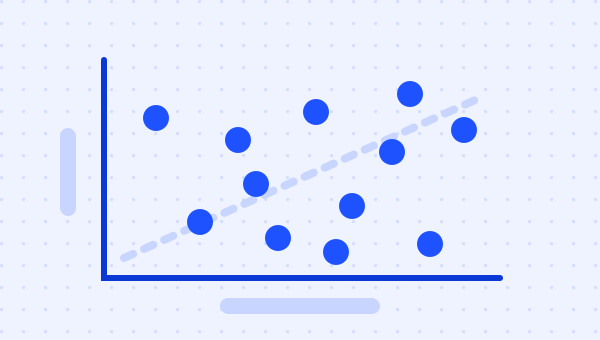
There is a persistent belief that a more expensive item is a better one. Across a marketplace it holds far more loosely than either side assumes.
What price actually reflects
How much the seller thought they could charge. That is shaped by their confidence, their country's cost of living, what they saw others charging, and how long they spent building it. None of those is quality.
Where the correlation is real
At the very bottom. An item priced at a few dollars usually cannot fund the support and maintenance that keeps software alive, so extremely cheap items really do go stale more often. That is an economics effect, not a craft one.
Where it breaks down
Between the middle and the top it largely disappears. A $79 item and a $189 item in the same category are frequently indistinguishable in build quality, and the difference is positioning.
What this means for sellers
Pricing low to signal value is a mistake, because buyers read it as the opposite. But pricing high without the update history and support to back it is a refund waiting to happen. Price for the support you will genuinely provide.
What it means for buyers
Do not use price as a shortcut for judgement. Update history, support conversations and the demo all carry more information, and all of them are free to check.